

11 Effective Practices To A Successful B2B Website Design
August 29, 2023 | Ishita Karar
Table of Contents
One of the significant marketing strategies for B2B brands is to design a productive website that can attract and retain potential customers. According to a study by PR Newswire, 76% of consumers search for the online presence of a business before physically visiting it. Hence, designing a business website that’s visually appealing as well as works perfectly is important.
The design of your B2B website influences user experience, engagement, bounce rate, and conversion rate. A study by Top Design Firms in 2021, shows:
- 50% of consumers believe that a company’s web design is important to their overall brand.
- According to the study, 38% of consumers evaluate the layout and navigational links after visiting a site.
You probably have seen there are lots of B2C web designing practices on the web. However, the concerning aspect is many B2B companies utilize those B2C practices on their websites. Being a seasoned Dallas Web Design Company, we must tell you that the designs of a B2B site slightly differ from a B2C site.
In today’s article, we’ll explore what B2B website design is, the best practices to achieve it, and how it differs from a B2C website design in detail. Let’s delve in!
What is B2B Website Design?
B2B website design refers to the process of crafting a well-functioning website for businesses to conduct transactions with other businesses. The mission of a B2B website design is to offer a user-friendly customer experience and exhibit a professional and reliable image of the company.
Many business owners may get confused between B2B website design and B2B website development. We must inform them that there is a slight difference between these two aspects.
B2B website development refers to the backend activities of creating a website, including coding, buying the domain name, etc. On the other hand, B2B website design focuses on the front-end part, which the users see and interact with. A website design focuses more on making the site visually appealing and useful for visitors.

Now let’s deep dive to get a complete guide for effective B2B Website Design
How to Design a Productive B2B Website to Scale Your Business?
The design of a B2B company’s website plays a crucial role in attracting traffic, building trust, and driving conversions. Below are eleven best practices that a professional website design company in Dallas executes for designing a successful B2B website.
1. Analyze Your Competitors’ Website
Analyzing your competitors’ sites is an important part of crafting an impactful B2B website design. It enables you to understand their marketing strategy and tactics to attract customers to their business.
By comprehending your competitors’ websites, you can get valuable insights into how other businesses in your industry are performing. Some popular competitor research tools are:
- SEMRush
- SpyFu
- SE Ranking
- Ahrefs
- Similarweb
Evaluate the User Experience (UX), paying attention to the navigation, design, and content presentation. Analyze the messaging, the value propositions, and how they present their products and services. For effective lead generation, examine their SEO tactics, CTAs, forms, mobile responsiveness, and interactive components.
Make sure to gather insights without directly copying your competitors’ design; otherwise, it can compromise your brand alignment, innovation, and uniqueness.
2. Consider Designing an Intuitive B2B Homepage
The homepage is the first thing that your visitors see. It acts as an introductory page for your website. Below are some points to note while designing your homepage that assure visitors feel they are in the right place.
- Captivating content: The homepage of your B2B website creates an initial impression within just a few seconds. The content of your homepage influences visitors’ decisions about whether they will stay or leave. The design or content that speaks about your product or service must be captivating on your homepage.
- Easy navigation: While designing your B2B website homepage, you need to be thoughtful about the navigation. Make sure the navigation menus are easy to read and use otherwise, you risk annoying the visitor, making them leave the site. Also, try limiting the number of categories in the main menu and including a search bar on each page.
- Clear CTAs: Unique and clear CTAs are the cornerstone of a B2B website homepage. Consider placing CTAs using play-on-words or contrasting colors that complement the theme of your homepage.
- Videos: Complex B2B solutions often require in-depth explanations. Informative visual content or videos on your B2B website homepage help visitors better understand your message.
Your company might experiment with a variety of B2B video formats in order to connect with potential customers and website visitors. You can include product overviews, demo videos, how-to videos, explainer videos, and customer testimonials.
3. Optimize the Website’s Layout for Easy Navigation
The layout of a website influences the visual appeal as well as the site navigation. It encompasses multiple elements, like color scheme, font style, page structure, loading time, among others.
Here are a few tips to design your B2B website layout to attract and retain customers:
- Consider keeping the headers short and to the point.
- Highlight your Unique Selling Propositions (USPs) along with your product or service. Your USPs will make your offerings stand out, influencing customers to choose your product or service over your competitors.
- Feature your most significant projects. It will showcase your proficiency and capabilities.
- Place the primary concerns of your prospect at the top.
No particular layout is considered best for B2B website design. Also, you probably do not want your website to look ordinary or similar to your competitors.
Hence choosing a customized layout over a template will be an ideal option. An experienced website design company in Dallas can customize your website according to your business needs.
4. Add Clear Calls-to-Action
After getting visitors to your website, you probably want them to take action and interact with it. On your B2B website, calls-to-action (CTAs) are strategic elements, like contact form submission or clickable buttons, that encourage viewers to take action, directing their path.
Well-crafted CTAs aligned with your content’s purpose create a sense of urgency and increase their click-through rate. Strategic placement of these CTAs on vital pages, like contact information, and service pages, improves user experience and enhances conversions.
Focus on crafting CTAs with clear, action-oriented language, like ‘book a free consultation’ or ‘request a demo’ that grabs attention.
5. Avoid Talking Too Much about Yourself
One of the significant mistakes B2B enterprises make is talking too much about themselves. Visiting a company’s site that speaks immensely about who they are can be quite monotonous to customers.
Consider including content on your B2B website that the visitors can relate to. Add sections or materials that make your visitors feel like you are speaking on their behalf.
For example: If you visit the site of Evernote, a note-taking software, the first message you can notice is “Tame your work, organize your life”. The message is smartly crafted to show how their service can ease the users’ lives, which grabs users’ attention to their business. It has clearly stated what they are good at without flaunting much about themselves.
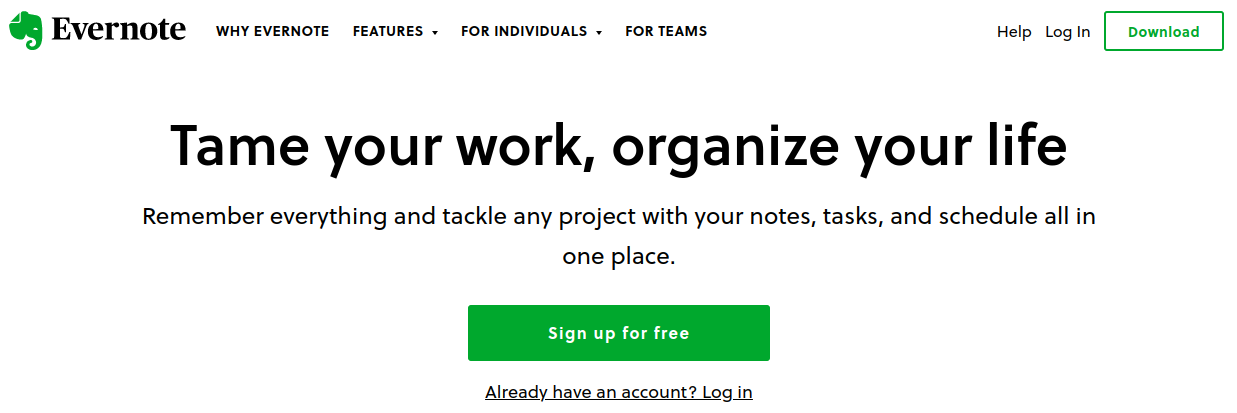
This strategy also works as an intuitive CTA, influencing visitors to click on them.
6. Utilize the Advantages of Content Marketing
B2B websites with great content can significantly draw visitors’ attention toward the business. A content strategy helps expand brand awareness and recognition, taking it to a larger audience.
A strong content strategy includes engaging content that connects to your target audience. It promotes meaningful conversations, building trust and credibility with your audience.
Several pieces of content, like blog posts, videos, case studies, and webinars, enhance your B2B product messaging, setting it apart from competitors. It develops reliable messages that connect with the target audience, influencing their choice towards your business.
To build a strong content strategy, analyzing your competitors’ sites is crucial. Through competitor research, you can understand their keyword planning, a major factor in their website optimization.
According to David Ogilvy, a British advertising tycoon, consumers buy product benefits rather than the product. Hence, consider highlighting the benefits that your customers can get along with your products.
7. Personalize Website Copy for Each Customer Segment

Whether it’s a B2B or B2C business, personalization is the key factor to engage your customers emotionally.
Your B2B website copy is among the first few things the customers notice after discovering the site on the web. Hence, it must be personalized as well as visually appealing.
Personalizing your website’s copy for each customer segment does not refer to sending emails with their first names. It involves gathering data about their needs and crafting copies according to them.
By including chatbots you can guide potential customers through each step of your sales funnel. Through conversations, businesses use chatbots to offer tailored recommendations by understanding the interests and preferences of each customer.
8. Make Your Site Load Faster

Since customers visit a B2B website with a high-priority purpose, the website must load faster. Every second of delay might lead potential customers to your competitors’ sites.
The “bounce rate” in a website increases when a visitor enters the site and then leaves without interacting further. It often happens when the loading speed of a site is too slow. A slow-loading site with a higher bounce rate struggles to rank on search engines, like Google.
You can make your B2B site load faster by following the tactics below:
- Making the website design simple.
- Compressing high-resolution graphics.
- Reducing the number of redirects.
- Eliminating unnecessary plugins.
In case you find these tasks a bit confusing or difficult, turn to a professional Web Design Company in Dallas for assistance
9. Ensure the Site is Optimized for Mobile Devices
As per a study by Statscounter, 56.8% of web traffic comes from mobile devices whereas 43.2% comes from desktops worldwide.
According to Google:
- Mobile-friendly sites show up higher in search results.
- If a site is not mobile-optimized, it has 5 times more chances to lose visitors.
- Many advertisers claim that the majority of traffic comes from mobile devices.
These statements show the importance of a B2B site being optimized for mobile devices. The design of your B2B website has a huge impact on its mobile friendliness.
The design, including content, graphics, and fonts must be easily visible and readable on the small screens. Also, the site must load and open quickly on mobile devices.
Make sure your CTAs are clickable perfectly on both desktop and mobile devices.
10. Incorporate Chatbots to Drive Conversation

Whether a visitor will turn into a paying customer or leave your site can depend on their initial conversation with your business.
A great website copy can provide site visitors with the necessary information about your business. However, an open-ended conversation can help them with quick answers to their queries. Chatbots are the most common and efficient option to initiate a conversation with site visitors.
There are multiple benefits of including chatbots in your B2B website:
- They help users easily understand your message.
- Collect users’ information.
- Offer self-service.
- Deliver fast and real-time responses.
If integrating chatbots into your B2B website seems complex, seasoned website designers from a Dallas web design company can help you with it.
11. Do Not Forget to Include Testimonials
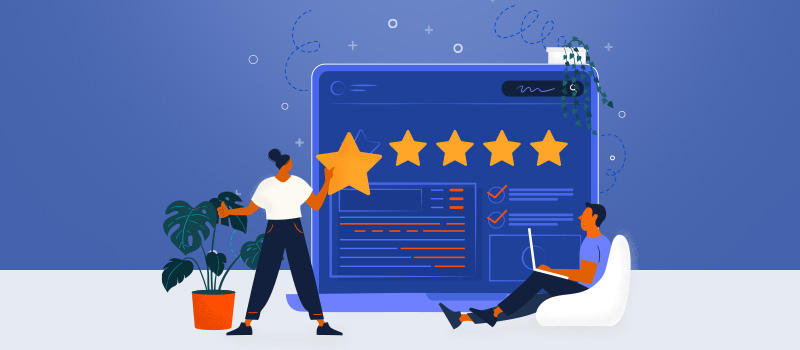
Reviews from previous customers go a long way toward building trust and credibility in B2B companies. It creates a sense of reliability when visitors see the experience of existing customers.
By including testimonials on your B2B website, you can showcase how your business has helped other companies to grow. You can highlight your accomplished projects and your problem-solving skills to your future customers.
Differences between B2C and B2B Website Design Practices
There are a few notable dissimilarities between B2B and B2C website designs.
-
Purchase Process
B2C website design includes a short purchase process: from being interested to making a purchase. Here, customers need to put their information and click ‘place order’ or ‘buy now’.
On the other hand, the B2B purchase process is much more complex than the B2C purchase process. It includes multiple stages, like filling out query forms, personal interactions, evaluation of proposals, approvals, and a lot more.
-
Psychological Factors
In B2C enterprises, psychological factors often influence consumers to make a purchase. Here branding plays a notable role in controlling buyers’ decision to choose a particular product or service over others. For example, the majority of people wish to have Apple’s iPhones due to their trendy and luxurious feeling.
In B2B purchases, psychological factors are associated in a different way. Here, two emotions, including fear and risk aversion, are involved. Customers need to be cautious about a purchase since a wrong decision can take its toll on their entire team and the overall company.
-
Pricing Models
B2C pricing is clear and straightforward. It does not vary from customer to customer unless one has a discount coupon.
On the other hand, B2B pricing is not consistent. The charges of B2B products or services differ from company to company, depending on the specific needs of their clients. Here, the costs can be customized and negotiable.
-
Buyer Decision-making
For each purchase, a B2C website needs to interact with one individual: the buyer (decision maker). The individual does not require others’ permission or justification to make the purchase.
When an individual interacts with a B2B site, a team of people is behind them. Sometimes, the involvement of multiple people makes the decision-making process more complex. It makes the B2B purchasing journey longer compared to the journey of B2C purchases.
Unlike B2C website designs, B2B web designs need to include more information along with access to staff.
FAQs Related to B2B Website Designs
-
Why is my B2B website not generating leads?
The possible reasons your website is not generating leads can be:
- Improper integration of SEO,
- Lagging page speed,
- Lack of call-to-action,
- Confusing navigation,
- Negligence of mobile optimization,
- Unstructured lead generation,
- Absence of digital interactive features,
- Poor and insufficient content.
Identify which of these factors are preventing your site from generating leads and find a solution under our “Why is my website traffic going down?” article.
-
Why is my B2B website not showing up on Google?
Is your website absolutely new on the web? According to Google, it takes a few weeks to discover and show a new website on SERP.
There can be other reasons for your site not showing up on Google, like technical misconfiguration, broken links, poor content, slow loading, lack of quality backlinks and credibility, use of competitive keywords, and poor website UX.
-
Why is my B2B website traffic not converting?
A majority of website owners state the issue: “my website doesn’t convert.”
A faulty SEO optimization can provide a poor user experience. Besides, check if your website is optimized for mobile devices. Also, complex CTAs, too much buffering, complicated checkout procedures, excessive pop-ups on your landing page, and a poor user experience can lead to a low conversion rate for your website.
-
How can I measure the success and performance of my B2B website?
First, you should utilize web analytics to track your website traffic, user engagement, and conversion rates. Observe the number of your site’s click-through rates, bounce rates, time on page, and form submissions.
Consider implementing event tracking, goal tracking, conversion tracking, and collecting feedback to perform specific actions and improve the site’s performance.
-
Why is my B2B website traffic going down?
There can be multiple answers to your question: “Why is my website traffic going down?”
For example, your site is probably not following the new algorithm updates of major search engines, like Google and Bing. Or, it might include inappropriate SEO practices, outdated keyword strategies, and broken redirects.
Besides, if your site isn’t encrypted and secured, it can lead to declination in your website traffic.
The Bottom Line
The secret of a successful B2B website is not only providing quality service and information. Multiple factors are responsible for crafting a productive B2B website design.
From analyzing your competitors to collecting and including customers’ feedback, you need to ensure that your B2B website is following all the above-mentioned practices. Also, make sure not to confuse between a B2B and B2C website design.
In case you need professional guidance our designing team is always there to help you with your B2B web design in Dallas.
After all, a properly functional website along with a perfect design has a huge impact on the prosperity of your B2B brand. It has the capability to turn a large number of visitors into potential customers.


RELATED POST

Responsive website design is often plagued by the problem of hierarchical arrangement of content, as the various elements on the...
READ MORE
Table of Contents What is Google Search Console? How to Add Your Website to Google Search Console? How to Link...
READ MORE
Table of Contents What is Website Redesigning? 7 Signs Your Website Needs a Redesign How Often Should You Redesign Your...
READ MOREPartners



Copyright © 1999-2026, B3net inc.